What is CBD? A plain answer for UK buyers
Checked by Priya, quantity surveyor, Bristol FSA list of 18 November 2026
Ad This page contains affiliate links. We earn a commission on sales made through links marked Ad. It does not change the order: products are sorted by price per mg. How we earn.
In this guide 10 parts
- 01The short definition
- 02CBD and THC: why the difference matters in law
- 03The forms you will find in the UK
- 04What does CBD do?
- 05Where the FSA list and the 2026 status fit in
- 06Check any product yourself
- 07How to read a label
- 08The 10 mg a day advice
- 09What you will not find on this site
- 10What I would do first
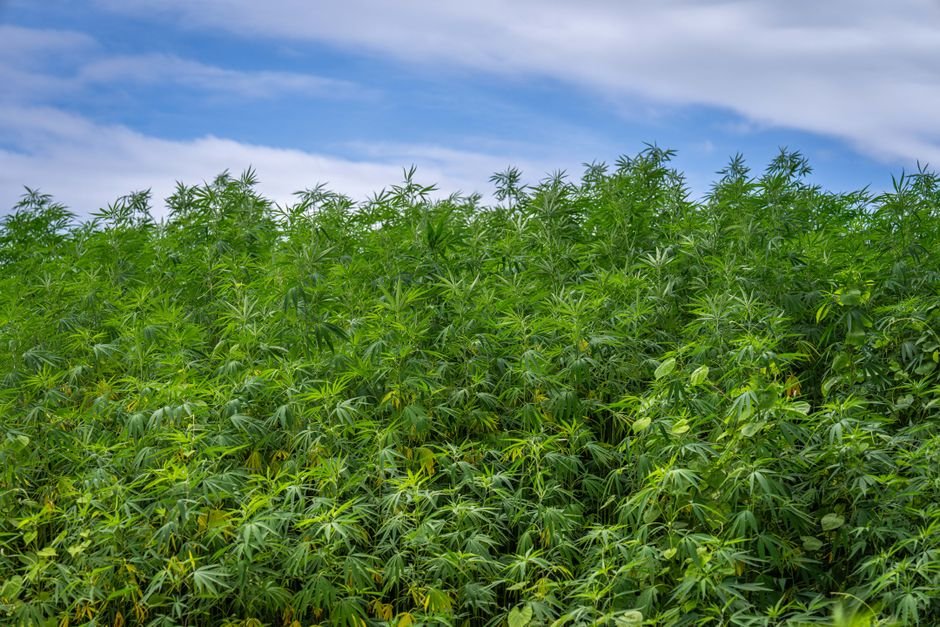
CBD is short for cannabidiol, one of the cannabinoids found in the hemp plant. In Great Britain it is sold mostly as a food product, in oils, capsules, gummies and drinks, and no CBD food is authorised yet. What it does is a question this site cannot answer, because no health claim is authorised for CBD and the evidence does not allow promises. What we can do is tell you what it is, how it is regulated, and how to read a label.
People type “what is CBD” into a search box and get a wall of enthusiasm. I would like to do the opposite. I am a quantity surveyor in Bristol, and my job is to say what something is, how much of it there is, and what the paperwork says, before anyone gets excited. That is the approach here. We read pages, labels and the FSA public list. We have not bought or tried any product, so there are no reviews, no ratings and no “I felt” stories. Everything below was checked on 18 November 2026.
The short definition
Cannabidiol, shortened to CBD, is a chemical compound called a cannabinoid. Hemp, the plant it comes from, makes many cannabinoids. CBD is one of them. THC, the better known one, is another. Manufacturers extract CBD from the plant, and sell it in oils, capsules, gummies, drinks and cosmetics, among other forms.
The Home Office makes a specific legal point: CBD as an isolated substance, in its pure form, is not controlled under the Misuse of Drugs Act 1971. In the same fact sheet it adds that it is highly likely that CBD products will contain controlled Class B cannabinoids, such as THC and THC-V. So the word “CBD” on a label tells you which compound the brand is selling. It does not tell you that the bottle holds nothing else.
I have not found, in the sources I read for this site, a sentence from the FSA or the Home Office on whether CBD produces a “high”. So I am not going to make a statement of my own on it. The legal distinction is clear, though, and it runs through the next section.
CBD and THC: why the difference matters in law
Under the Misuse of Drugs Act 1971, cannabis is a Class B drug. The Act’s definition covers any plant of the genus Cannabis or any part of it, with exceptions after separation for mature stalk, fibre and seeds. The same schedule lists cannabinol and its derivatives. That is the reason we do not cover flowers, resin or pre-rolls anywhere on this site: the definition catches them.
A CBD product can sit inside the law only if it is what the regulations call an “exempt product”. The Misuse of Drugs Regulations 2001 set three conditions. The one that matters most to a buyer is that no one component part of the product contains more than one milligram of the controlled drug. The Home Office reads “component part” as the container, such as a bottle of oil, not a single dose. The proof it points to is an analysis from an accredited laboratory (ISO/IEC 17025, UKAS in the UK).
Put numbers on it. A 10ml bottle can hold no more than 1 mg of THC in total. Measured as a share of the bottle, that is a very small figure, and you cannot see it by looking at the bottle. That is why I place a certificate of analysis for the batch, with the THC result for the whole bottle, above any word on the front of the packet. Our guide to reading a certificate shows what to look for.
The forms you will find in the UK
CBD is sold in many forms, and the form decides which rules apply. Here is how I sort them.
Foods: on the FSA list or off it
The most common forms are oils (drops taken from a dropper), capsules, gummies and drinks. The FSA classes CBD in food as a novel food, which needs authorisation before it can legally be sold. It says plainly that there are currently no CBD extracts or isolates authorised as novel foods. What exists instead is a public list of products whose businesses applied in time, and a status for each. We show the numbers later in this page.
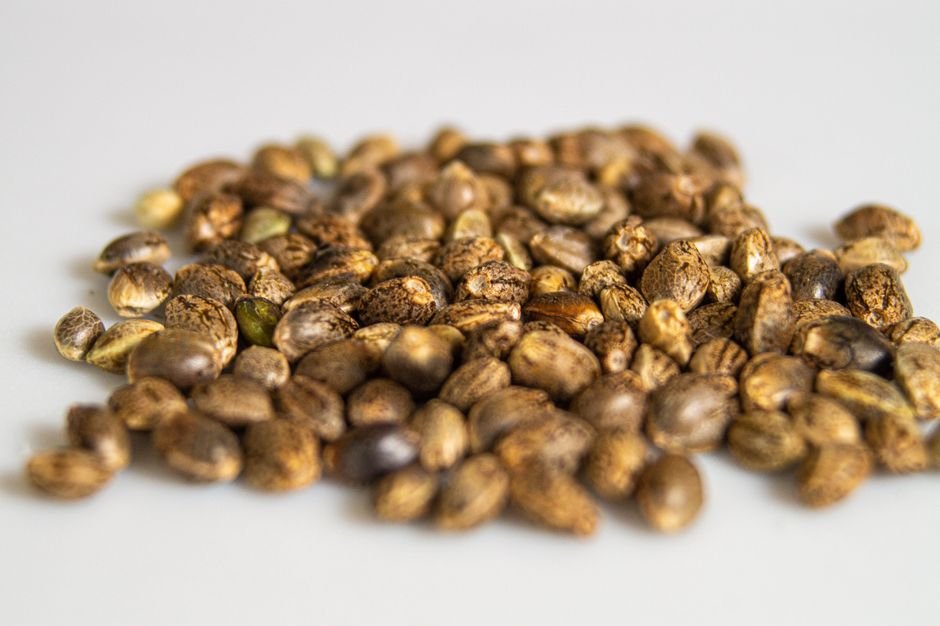
Hemp seeds and hemp seed oil are a different category. The FSA says that foods made from them have a history of consumption and are not novel. That is not the same as a CBD extract, and a product sold as “hemp oil” is not necessarily a CBD oil. Read the label for the CBD content in mg.
Cosmetics: outside the list
Creams, balms and similar products are cosmetics, regulated under a separate regime by the Office for Product Safety and Standards, with a Responsible Person in the UK and a notification before sale. The FSA list only covers foods, so a cosmetic cannot appear on it, and its absence tells you nothing about the product. This site does not use the list to check them, and we make no claim about what they do.
Vapes: not on this site
Since 29 October 2026, under the Tobacco and Vapes Act 2026, selling any vaping product to someone under 18 is an offence in England and Wales, with or without nicotine. Advertising for vaping products is also due to become an offence once a further part of the Act comes into force, and no date was in the text I read. Because of that, we do not cover them. We do not promote anything for smoking or vaping, and nothing on this site is written for anyone under 18.
What does CBD do?
This is the question behind a lot of the searches, and it is where I have to be careful. The honest answer has three parts.
- No health claim is authorised for CBD in Great Britain. The advertising regulator says there are no authorised claims for CBD on the GB Nutrition and Health Claims Register. A business that says its product has a medical effect risks having it classed as a medicine, which needs a licence.
- The research is not a promise. Scientists study CBD in many settings, and the FSA has published safety assessments of it. A study is not a guarantee about the bottle you buy, and nothing I read backs a promise for a food product. When you see a page that says what a product “does for you”, it is breaking rules that exist for good reason.
- Your own situation is a matter for a professional. If you have a health question that CBD might relate to, ask your GP or a pharmacist. Do not use a shop page to decide, and do not stop a prescribed medicine on your own.
The FSA also points to possible long-term effects such as liver damage or thyroid issues, which is one reason it gives a daily figure at all. I do not know how likely they are. I quote them because the regulator does.
That is why I will not name any effect on this site, even softly. Even a soft word can be a problem: the ASA ruled against “help find some calm” on a CBD drink in July 2025 (Trip Drink), and I treat words like “balance” and “wellbeing” as risky for the same reason. A page that is short on promises is not hiding anything. It is following the rules.
Where the FSA list and the 2026 status fit in
The short version: no CBD food is authorised in Great Britain yet. Some products can stay on the market while their applications are considered, and the FSA keeps a public list of them. When we downloaded it on 18 November 2026 it held 12,115 entries: 10,374 Validated, 702 Awaiting evidence and 1,039 Removed. The register was last updated on 13 April 2026.
- Validated means the dossier contains the information the law asks for and has moved to risk assessment. It is not an authorisation.
- Awaiting evidence means the dossier is not yet validated but is progressing, with studies planned and a date agreed.
- Removed means the dossier did not progress far enough. The FSA says products marked Removed, or absent from the list, must be withdrawn from the market.
The FSA’s consumer page says that products on the list are not formally authorised for sale and that the FSA is not endorsing them. We have no link with the FSA. That is why we only say “listed on the FSA public list (status: Validated), not yet authorised”, and never “approved”.
In September 2026 the FSA recommended three applications to ministers in England and Wales: RP 7, RP 350 and RP 427, for CBD of 98% purity or more, for adults, up to 10 mg a day. No ministerial decision had been published by 18 November 2026. Around 3,000 products on the list are linked to those three applications. The list also covers England and Wales only. Scotland falls under Food Standards Scotland, and Northern Ireland follows EU law.
Check any product yourself
The form below searches the FSA list. Type a brand or product name, and compare the result with what is printed on your bottle. If the same product name appears twice, as happens, with one entry Validated and another Removed, you need to know which one your bottle belongs to, and the brand can tell you. Our how-to walks through it on the FSA site as well.
How to read a label
CBD labels use several kinds of number, and they are easy to mix up. I would convert everything to milligrams before comparing anything.
- mg (milligrams): the total CBD in the bottle, capsule pack or gummy pack. A figure like 500mg on a 10ml oil is the whole bottle.
- % (percentage): the strength of an oil. For a 10ml oil, 5% is 500mg, 10% is 1000mg, 15% is 1500mg and 20% is 2000mg. In a 30ml bottle multiply by three.
- ml (millilitres): the volume. A 10ml bottle and a 30ml bottle of the same percentage hold different totals.
- mg per unit: on capsules and gummies, the CBD in each one. A pack described as 900mg of 30 capsules means 30mg in each.
Next, add the price. If a bottle costs £20.00 and holds 500mg, that is 4.0p per mg. Delivery goes on top, and it needs to be there before you compare, because a charge of £6.00 on a small bottle changes the answer. Our guide to CBD oils compared per mg does that sum for each listed oil, with the prices we read on 18 November 2026.
The 10 mg a day advice
The FSA advises healthy adults to limit their CBD from food to 10mg a day, about 4 to 5 drops of 5% oil. It does not recommend CBD for under-18s, in pregnancy, while breastfeeding, when trying to conceive, or for people taking medication. This is advice, not a legal limit. Some capsules and gummies on the list carry more than 10mg in a single unit, so look at the mg per unit before you assume anything. Our page on the 10 mg a day advice turns drops, capsules and gummies into mg using real bottles.
What you will not find on this site
It helps to know our edges. We do not give:
- Any effect or health claim for CBD, however mild.
- Reviews, ratings, taste tests or “we tried it” stories. We bought nothing.
- Products that are not on the FSA list as Validated. We say when a brand sells others, and we do not link them.
- Flowers, resin, pre-rolls or vapes, and nothing for animals.
- Anything aimed at under-18s. CBD is for adults.
- Medical advice. If you take medication or have a health question, ask a GP or pharmacist.
Some pages on this site carry advertising links to shops, and we earn a commission on sales made through them. When they do, the page says so at the top. This page has no shop links.
What I would do first
If I were new to this, I would not start with a bottle. I would read the FSA’s consumer page, look up the product on the list, and write down the mg, the price and the delivery. Only then would I look at the brand’s own claims, and I would regard every adjective as unverified until I saw the batch certificate. That takes about ten minutes, and it is the same method that stops me overpaying on a quote.
Questions people ask
What is CBD?
CBD is short for cannabidiol, one of the cannabinoids found in the hemp plant. In Great Britain it is sold mainly as a food product, such as oils, capsules, gummies and drinks. The Home Office says CBD in its pure, isolated form is not controlled under the Misuse of Drugs Act 1971, but products usually contain other cannabinoids that are.
What does CBD do?
No one can promise you an effect, and the advertising rules do not allow a health claim for CBD in Great Britain. Researchers have studied it in various settings, but the evidence does not support promises for a food product. If you are thinking of using it for a reason connected with your health, speak to your GP or pharmacist first.
Is CBD the same as THC?
No. They are two different cannabinoids. THC is controlled under the Misuse of Drugs Act 1971, so a CBD product that contains it is only exempt if no one component part, such as a bottle, contains more than 1 milligram, among other conditions. That is why a certificate of analysis matters more than a front-of-pack word.
Is CBD authorised as a food in the UK?
Not yet. The FSA says no CBD extract or isolate has been authorised as a novel food. In September 2026 it recommended three applications to ministers in England and Wales for up to 10mg a day for adults. No ministerial decision had been published by 18 November 2026. Some products stay on the market while listed on the FSA public list.
Which CBD products can be checked against the FSA list?
Foods only. The list covers products such as oils, capsules, gummies and drinks that are sold as foods. Creams, balms and other cosmetics are outside it, and so are vapes. A cosmetic's absence from the list tells you nothing either way, which is why we do not use the list to check them.
How much CBD is safe to take?
We cannot tell you what is safe for you. The FSA advises healthy adults to limit their CBD from food to 10mg a day, which it says is about 4 to 5 drops of 5% oil. It does not recommend CBD for under-18s, pregnancy, breastfeeding, trying to conceive or anyone taking medication.
Sources we read
- FSA, Cannabidiol (CBD) advice for consumers (read 18 November 2026)
- FSA, Cannabidiol (CBD) guidance for businesses (read 18 November 2026)
- FSA public list of CBD products (read 18 November 2026)
- Home Office, cannabis, CBD and other cannabinoids drug licensing factsheet (read 18 November 2026)
- Misuse of Drugs Regulations 2001, regulation 2 (read 18 November 2026)
- CAP, Cannabidiol (CBD) containing products: overview (read 18 November 2026)
- FSA board paper, recommendations to ministers on first CBD authorisations (read 18 November 2026)